The Bonn issue
Half a Day in Bonn's Palm Houses and River Parks
A walkable circuit from the university's glasshouses at Poppelsdorf down to the Rhine promenade, with notes on opening days, building works and which parks suit a group.

By Camille LefèvreBonn on foot, one neighbourhood at a time
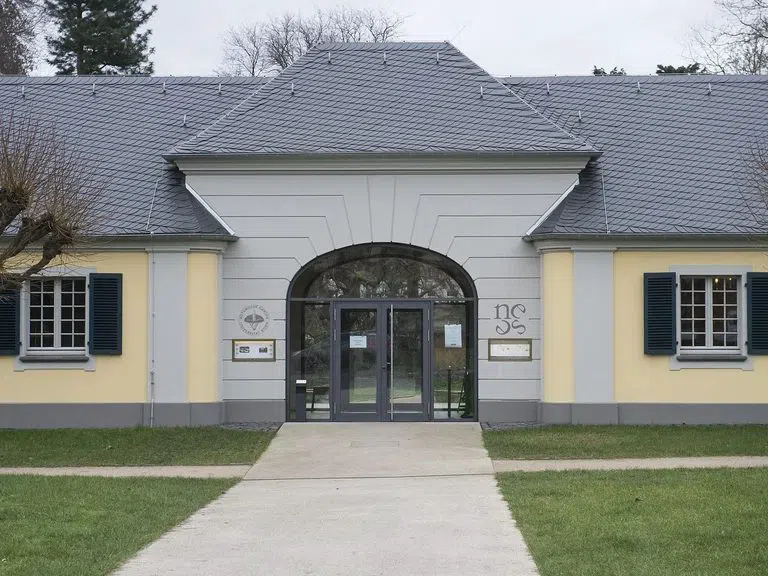
Bonn wears its green in rings. The electoral court laid out a formal garden behind the palace at Poppelsdorf, the Prussians left a bastion standing over the water, the 1979 federal garden show turned a bend of the Rhine into 160 hectares of lawn and lake, and the Kottenforst still presses up against the southern suburbs with real forest. Half a day on foot, with one short train ride if you want it, covers more of that than most visitors expect, and the only ticket you might need costs four euros.
The palace garden at Poppelsdorf
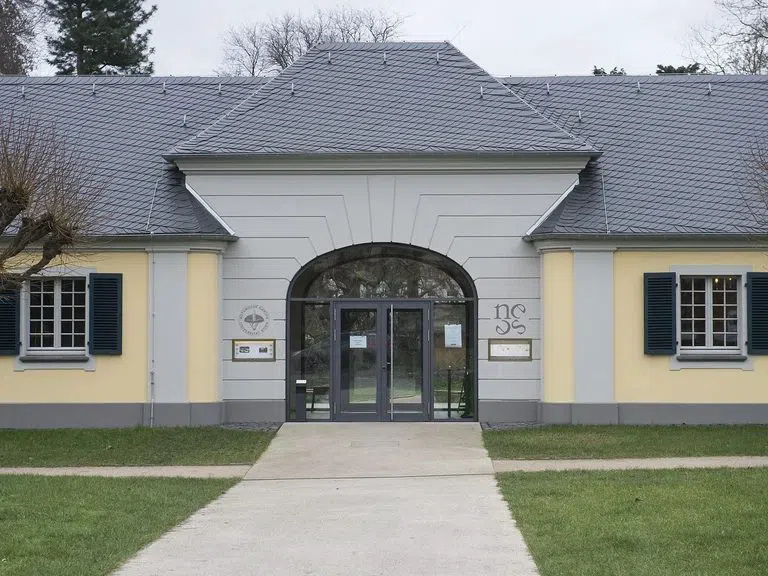
Start at the Botanische Gärten der Universität Bonn (Poppelsdorf), the walled garden behind Poppelsdorf Palace and about ten minutes' walk from the centre. The bones of it are eighteenth-century, an electoral pleasure garden that the university took over and never stopped filling, and the collection now runs to some 11,000 species between the beds and the glasshouses. The glasshouses are the reason to come in poor weather: they hold the tropical and subtropical collections, and on a grey Rhineland morning the air inside them is worth the walk on its own.
The pricing is unusual, so learn it before you go. Entry is free on weekdays. On weekends and public holidays it is €4 for adults and €2 reduced, with under-12s free. The Nutzpflanzengarten annexe (the useful-plants garden, tobacco and cereals and dye plants laid out in teaching beds) is free at all times. If you are in Bonn on a working day, you get the whole thing for nothing, which is the cheapest good hour in this article.
The seasonal catch matters more. From late October the Schlossgarten switches to winter hours, Monday to Friday only, 10:00 to 16:00, and closes at weekends entirely. A Saturday visit in November is a locked gate, not a bargain. Between April and September there are free public guided tours in English on the first Sunday of the month, and no guiding in the city costs less for what it gives you. Groups and private tours are arranged in advance by email to [email protected] or by phone on +49 228 73-5523; walk-in visits of any size are fine without arrangement, but a group that wants a guide should write ahead by a week or more.
Plan your Bonn trip
Live prices from our booking partners.
Free cancellation on many rooms. We may earn a commission when you book.
A baroque lawn and the quietest minute in the centre
Walk back toward the station and you arrive at the Hofgarten (Stadtzentrum), seven and a half hectares of baroque lawn that has doubled as the university's front garden since the electors handed the palace over. It is five minutes from Hauptbahnhof, which makes it the default meeting point for anyone arriving by train, and there are no restrictions on sitting, lying or gathering on the grass.
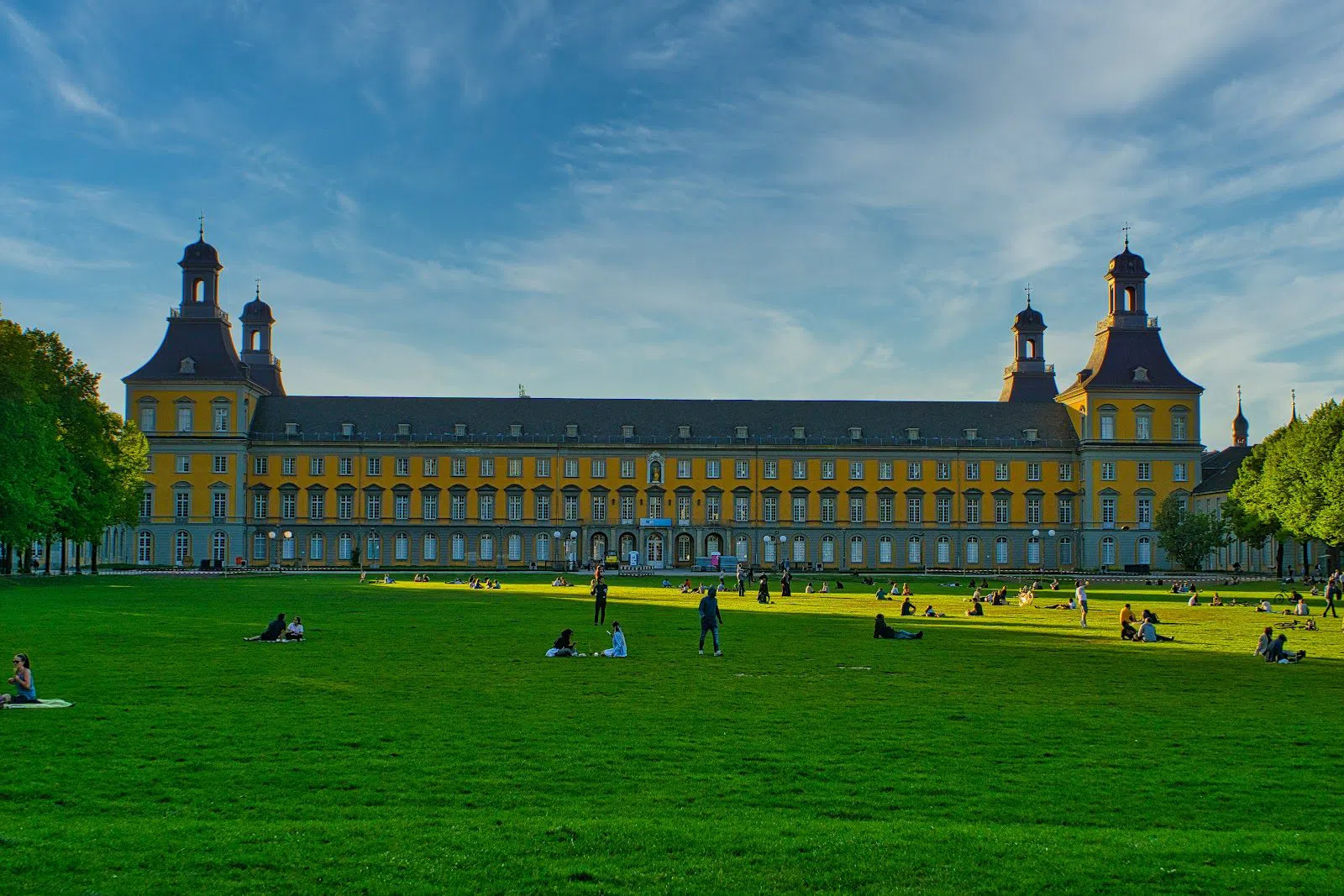
Be warned that you are looking at a working building site in places. The university's main building, the old electoral palace itself, entered a restoration in 2024 that is planned to run for around a decade, and temporary lecture pavilions are earmarked for part of the Hofgarten while it does. The lawn still works as a lawn. The photograph you had in mind of an unbroken baroque façade above it may not be available, and it is better to know that before you carry a picnic across town for it.
Five minutes north, the Alter Friedhof Bonn (Nordstadt) is the quietest green minute in the centre and the one visitors most often miss. Founded in 1715 and closed to new burials long ago in all but a few cases, it reads as a walled garden of nineteenth-century monuments under mature trees. Robert and Clara Schumann are buried here, as is Beethoven's mother. That makes it the natural green pause on any Beethoven walk through the old town, rather than a detour from one.
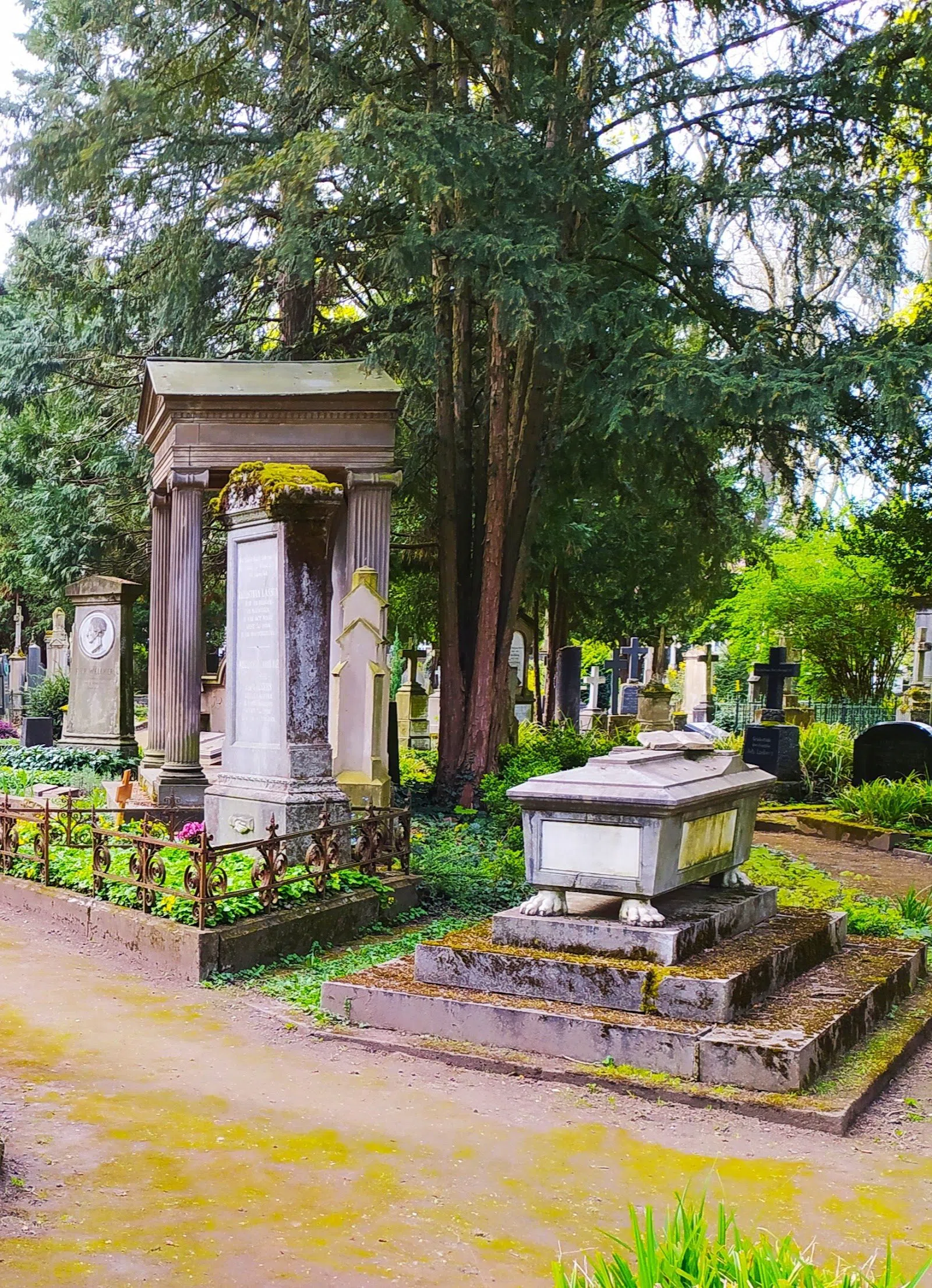
It is open daily and free. It is also still a cemetery, with mourners in it. Small guided groups are perfectly acceptable; voices should stay low, and this is not a place to sit down and open a lunch box. If you are travelling with a party of more than a dozen, split them and go in loosely rather than as a block.
The terrace above the water
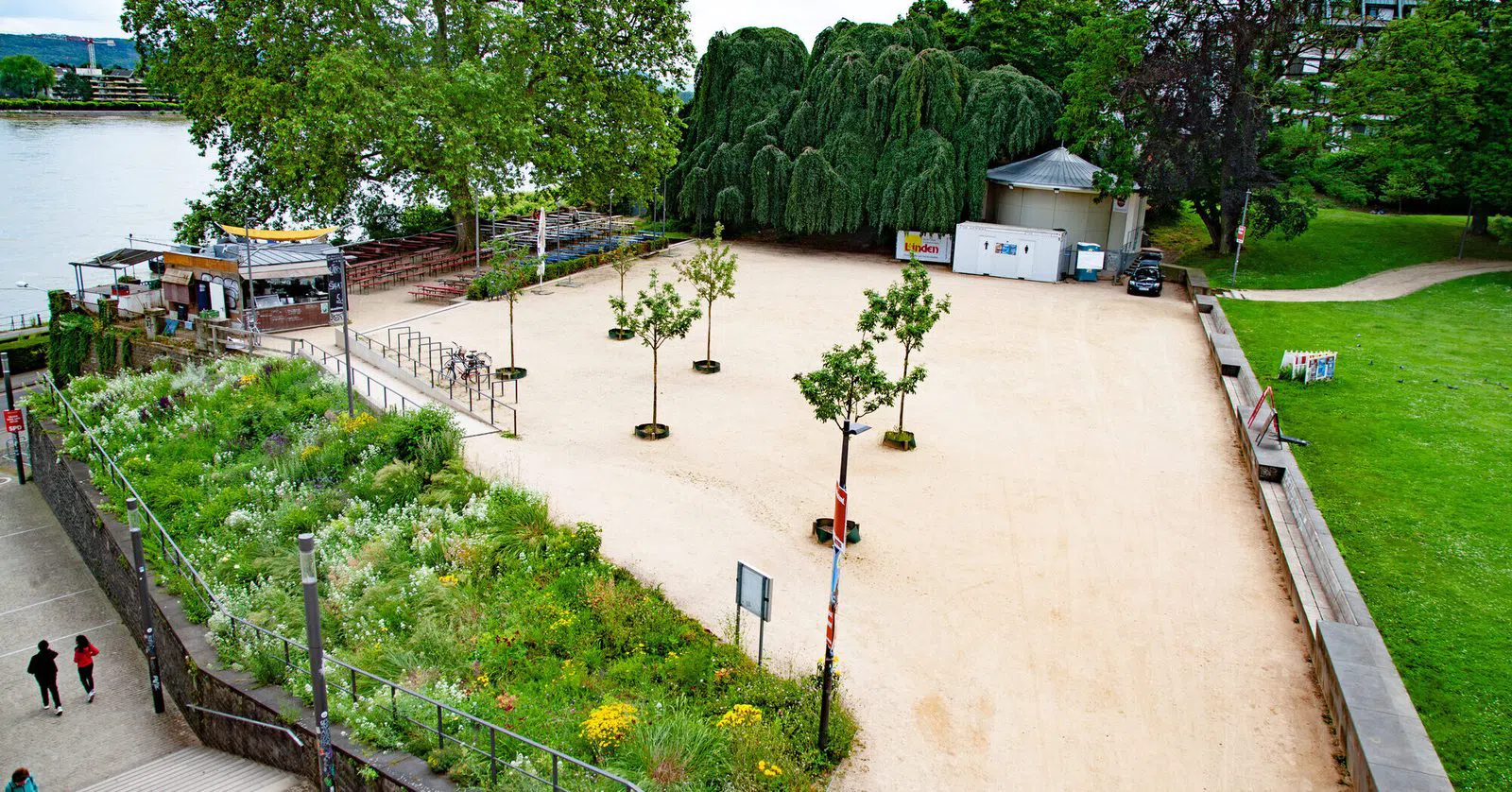
The Alter Zoll and Stadtgarten (riverfront, at the eastern edge of the Hofgarten) is where the city finally shows you the Rhine properly. The old customs bastion sits on the Dreikönigsbastion, which came out of a five-year restoration and is open again along with the terrace and the adjoining Stadtgarten below. That is worth stating plainly, because guidebooks written during the closure are still circulating.
It is free, unenclosed and the best free view in Bonn: the river below, the Beuel bank opposite, the Siebengebirge closing the horizon upstream. It is also the sunset spot every resident knows, so on a warm evening it fills. A group of twenty finds room. A coach party does not, and will spend the visit standing in other people's photographs. Come an hour before sunset rather than fifteen minutes before it, or come at breakfast time, when the terrace belongs to dog walkers.
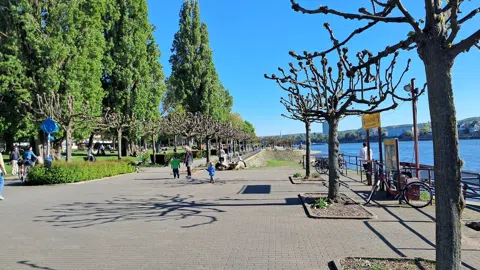
From the steps you drop straight onto the Rheinuferpromenade Bonn (Brassertufer through to the UN Campus, with a matching path on the Beuel bank). Counting both banks it runs to roughly 29 kilometres, the longest continuous promenade on the Rhine, and it links every green space in this article. Walking south from the Alter Zoll takes you past the UN Campus and on toward the Rheinaue in about half an hour at an unhurried pace.
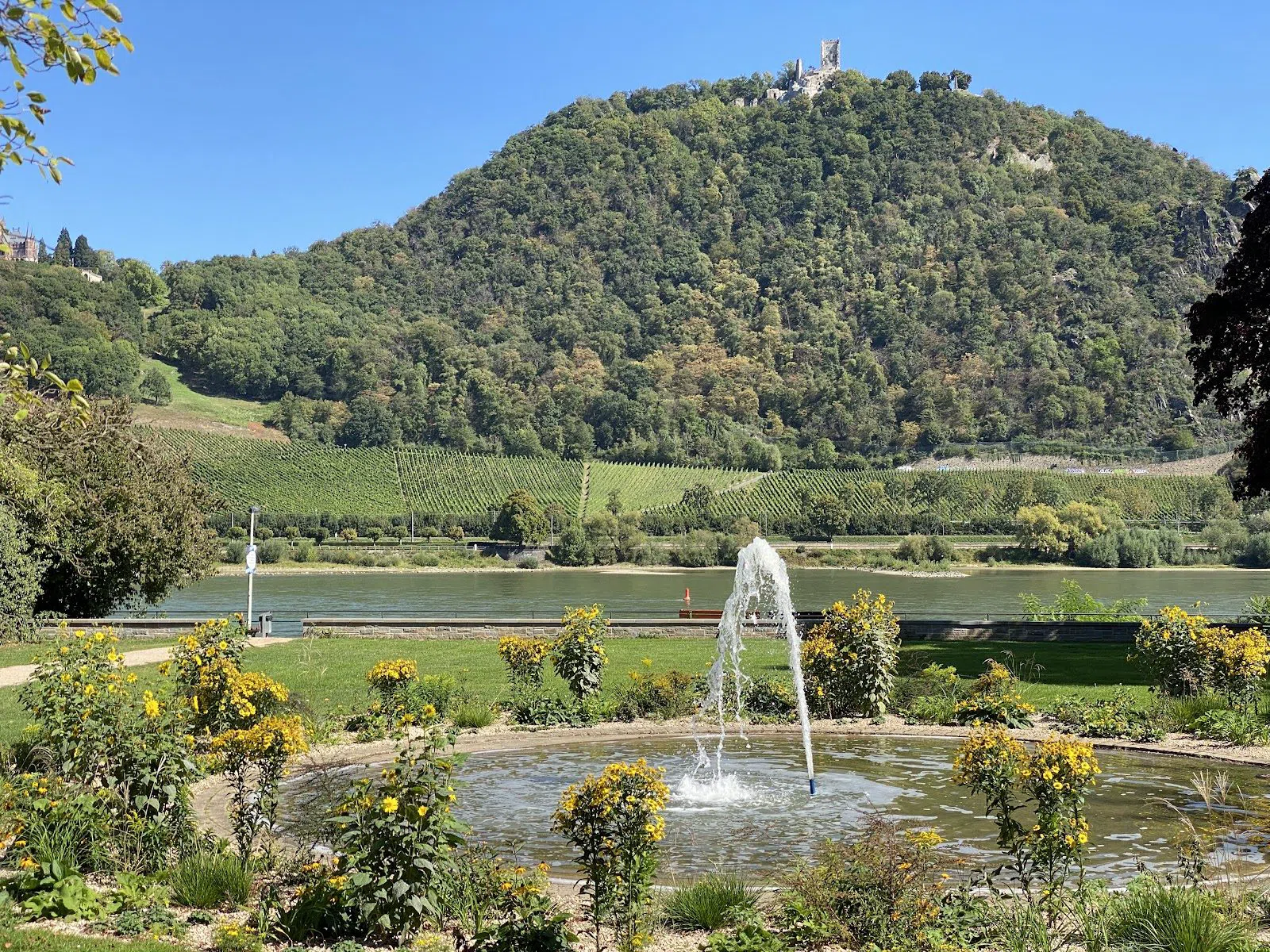
Two things to know before you set off. Promenade works at the Brassertufer are still running through 2026 and some accesses down to the water are narrowed or fenced, though the reworked traffic layout at street level reopened in May 2026. And the path is shared with commuting cyclists who are moving at speed; a group strung out across the full width will be rung at, fairly. Keep to one side, cross in a body rather than in a trickle.
One garden show that never came down
Freizeitpark Rheinaue (Gronau and Hochkreuz, south of the centre) is the other name every local gives out, and the scale is the point: 160 hectares built for the 1979 Bundesgartenschau and simply left in place, with 45 kilometres of paths threading the lake, the lawns and the woods. It absorbs crowds in a way no other green space here does. On a Sunday with an event on, you can still find an empty bench within ten minutes' walking.
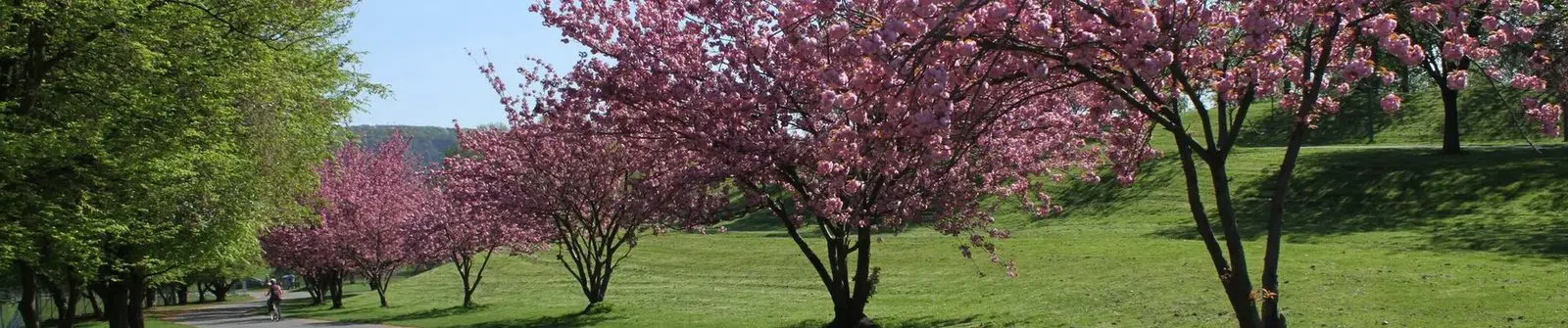
Inside it there are three set pieces worth aiming at rather than wandering past: the Japanese Garden, the rose garden and the blind garden, the last of them planted for scent and texture and labelled in Braille. Boat hire on the lake and minigolf are charged separately; the park itself is free and unrestricted. The Parkrestaurant beer garden takes bookings, which is the practical answer for a group of ten or more who want to sit down together at midday rather than queue in three shifts.
On the third Saturday of the month from April to October the park hosts one of the largest flea markets in Germany. That is either the reason you came or the reason you came on a different day; if you want the Japanese Garden in peace, avoid it.
The arboretum you have to book
Arboretum Park Härle (Oberkassel, right bank) is the connoisseur's entry on this list and the one that most rewards a plant-minded traveller, a private landscape park of mature and unusual trees above the eastern bank. It is not a turn-up-any-day park: registered groups are welcomed by appointment, and that is the main way in. Otherwise access is limited to the published open dates, roughly the first Saturday of the month at 10:00 and the third Wednesday at 17:00, March to October. Tours run an hour and a half to two hours.
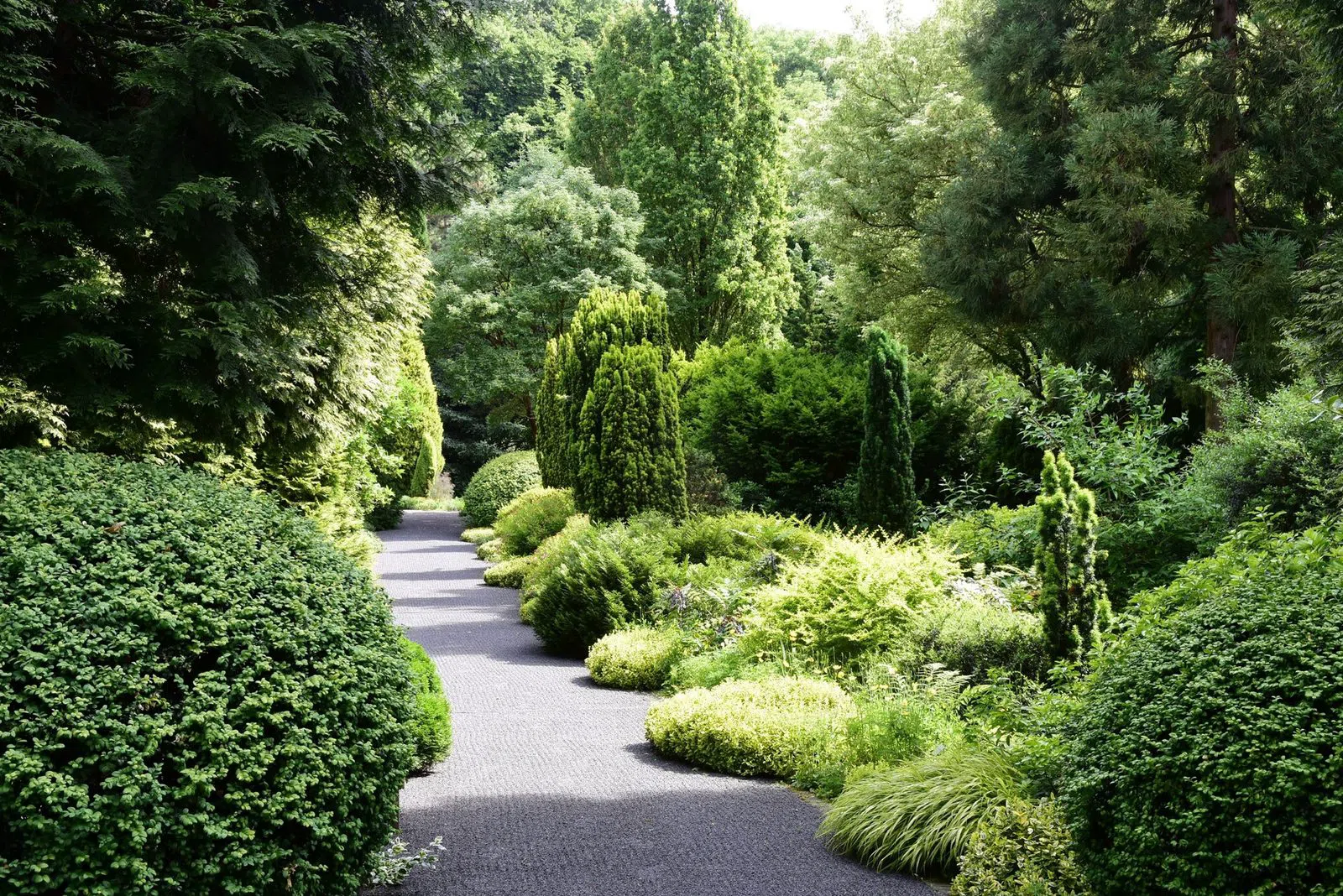
Entry is free and donations toward the upkeep are invited, which in practice means bring a note rather than shrapnel. Two people who happen to be in Bonn on the right Wednesday can simply turn up. Anyone else should write ahead and treat it as a fixed appointment in the day, not a maybe.
Forest, floodplain and a small volcano
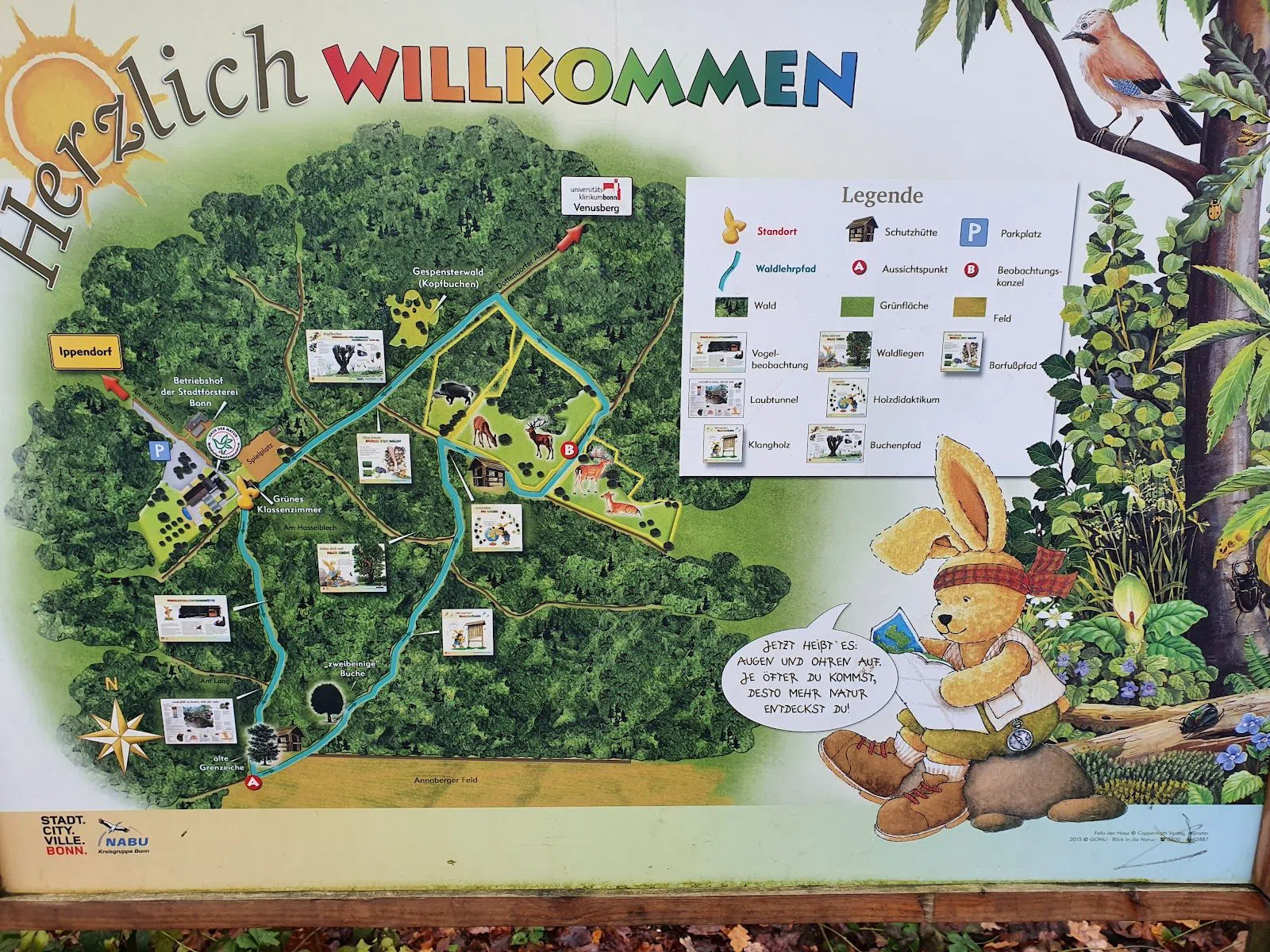
When Bonn wants actual forest it goes to Waldau — Wildgehege Venusberg and Haus der Natur (Venusberg), the northern tip of the Kottenforst above the city. Seven hectares of enclosures hold wild boar, red deer and fallow deer, the site is permanently open and unfenced to visitors, and it costs nothing. Spring brings boar piglets; from mid-September to mid-October you can hear the rut, the most atmospheric hour of the Bonn outdoor year. The Waldrestaurant Waldau takes group bookings and is the sensible lunch stop if you have brought children or a walking party.
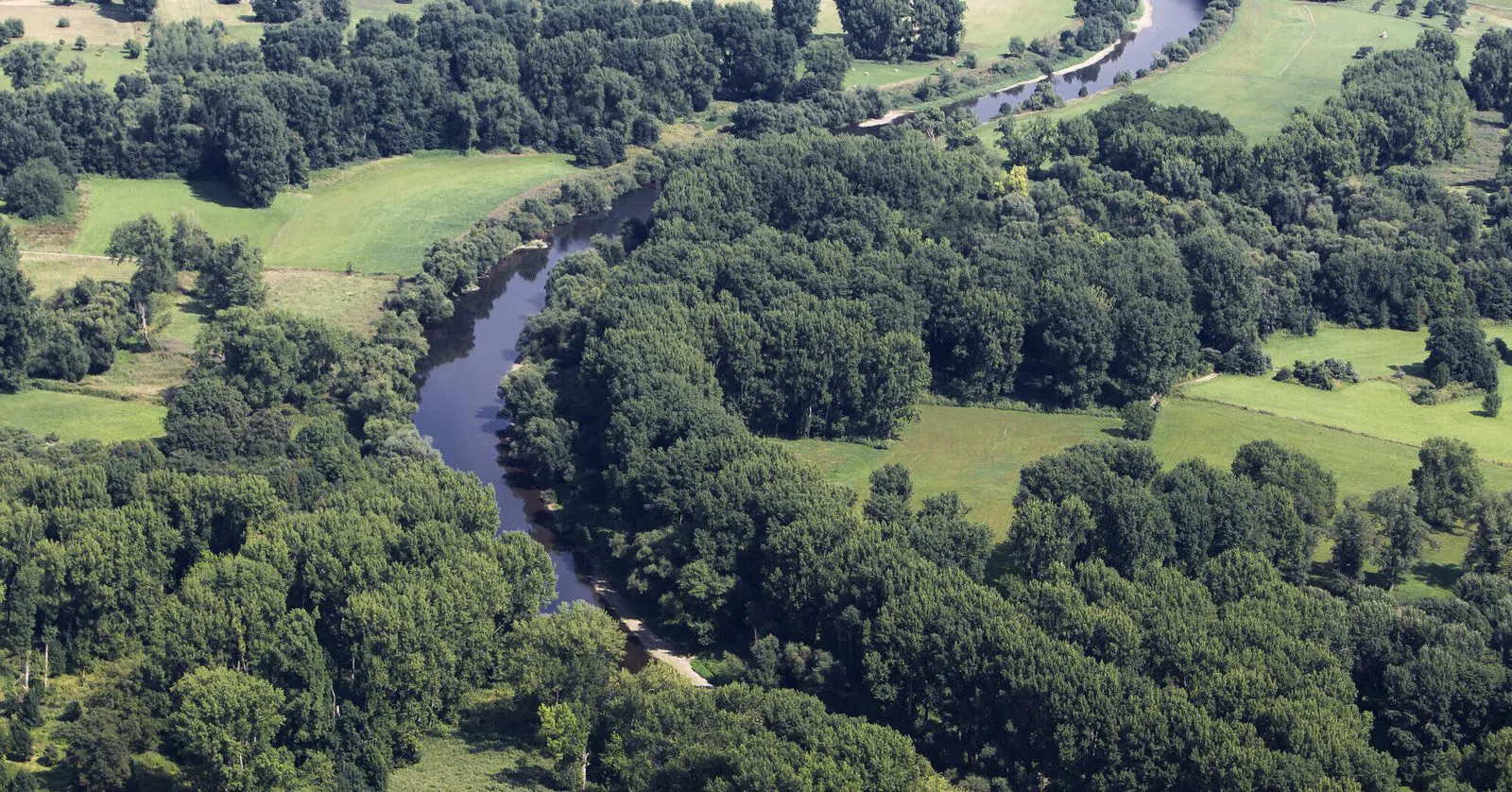
North of the city, the Naturschutzgebiet Siegmündung / Siegaue (Mondorf, at the Sieg's mouth) is the wildest green inside the city's orbit, around 150 hectares of one of the Rhine's last near-natural tributary mouths, reached from the Mondorf ferry. Access is free but on marked paths only, dogs must be on leads and swimming is not permitted; this is a protected Natura 2000 site. It suits small walking parties and birdwatchers and is entirely wrong for a large, loud group. Come here if the manicured parks have started to feel interchangeable.
On the southern edge, the Rodderberg (Bonn-Mehlem) is western Europe's youngest volcano, which sounds like a stretch until you walk the crater rim and see the bowl of farmland sitting inside it. A 3.2-kilometre loop from Mehlem gives the widest view in this article for the least effort: the Rhine below, the Siebengebirge across the water, the Eifel behind. It is a nature reserve, so stay on the marked trails. Mehlem has its own station on the left-bank line, so no car is needed.
Green stops along the regional line
The Redoutenpark and Stadtpark Bad Godesberg (Bad Godesberg) are eight hectares of former spa-town greenery either side of the Kurfürstenallee, laid out from 1790 around the Redoute, the assembly house where Beethoven played for Haydn. Both parks are free, open and easy for groups; the Redoute itself is an events venue with its own bookings, so the building may be closed to casual visitors on any given day. A tree trail was added in the Redoutenpark in 2026, which turns a pleasant half-hour into a properly instructive one for anyone who has come to Bonn for its plants.
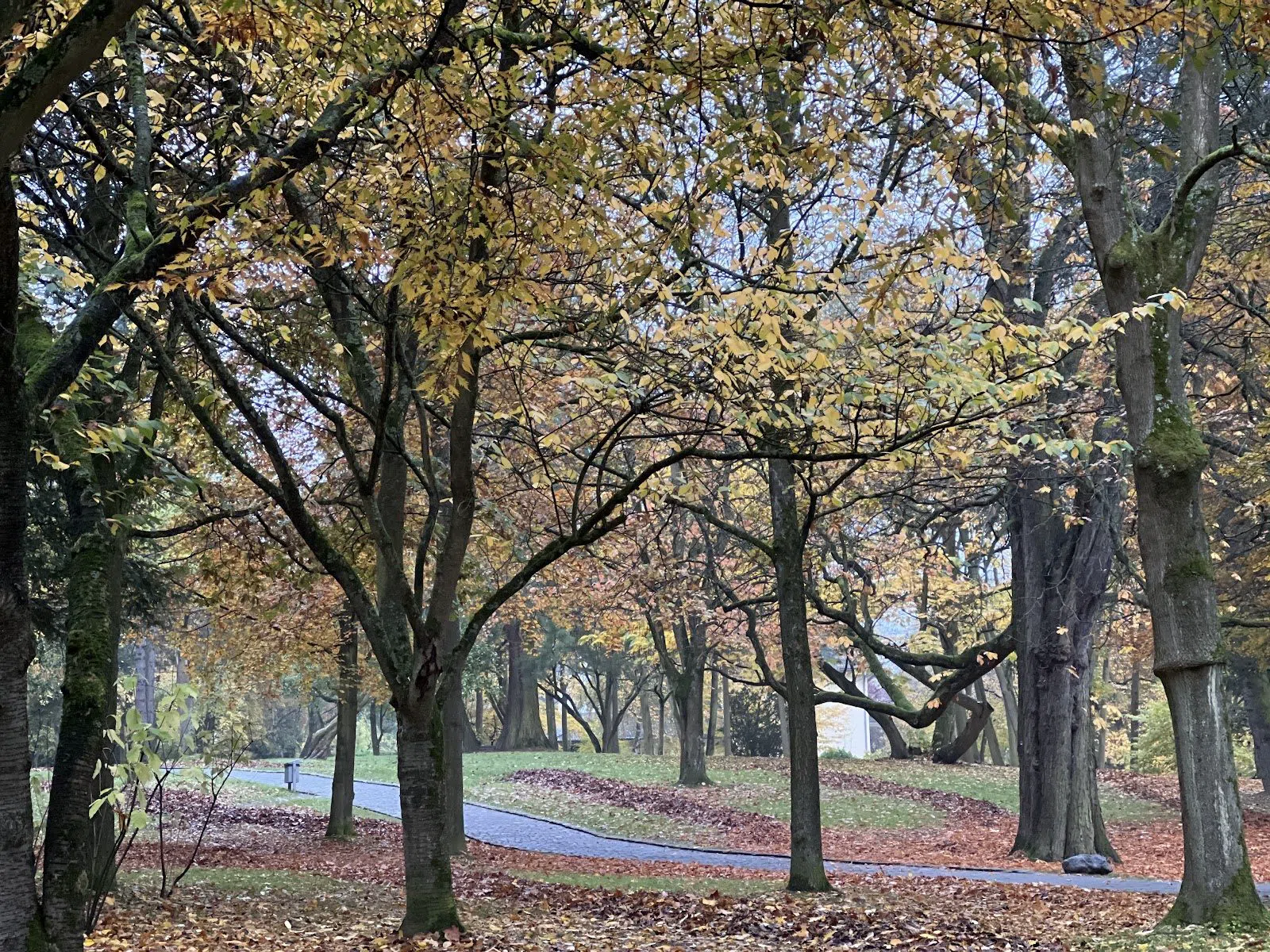
Twenty-odd minutes by train, Insel Grafenwerth (Bad Honnef) is an entire Rhine island given over to public park, with the Siebengebirge as its backdrop. Walking it is free and open access; the lido has its own season (it opened on 1 May in 2026) and its own ticketing, and the island hosts open-air events that occasionally take over part of it.
On the opposite shoulder of the same hills, the Nachtigallental (Königswinter) is the quiet way up toward the Drachenfels. Laid out in 1867 as a landscaped walking valley, it starts within sight of Königswinter station and avoids the crowded main route entirely; it is free, and single-file in places, so a walking group should expect to string out. It ends near the Milchhäuschen, which can only be reached on foot, no small part of why it stays quiet.
The Schlosspark Drachenburg (Königswinter) is the only paid entry here and the one that earns it: a zoned landscape garden laid out from 1881, a textbook of the late landscape style, wrapped around the castle. Admission is €7 adult, €5 child and €17 family for park and castle together. It is reachable on foot from the valley or by the Drachenfelsbahn rack railway. Groups are welcome with advance booking for guided tours, and on a summer weekend that booking is the difference between a tour and a queue.
Practical notes
Everything above is reachable on foot, by Stadtbahn, by regional train or by the Mondorf ferry, and none of it needs a car. A VRS day ticket covers the city and the runs out to Bad Godesberg, Königswinter and Bad Honnef; buy it once in the morning rather than in single fares. Bonn is compact enough that the central chain (botanic garden, Hofgarten, Alter Friedhof, Alter Zoll, promenade, Rheinaue) is a continuous walk of roughly three hours at a stroll, plus whatever you spend sitting down.
On money: the total cost of that central chain is zero on a weekday and €4 per adult at a weekend. Add €7 if you go on to Schlosspark Drachenburg, plus the pool fee if you swim at Insel Grafenwerth, and boat hire or minigolf if the Rheinaue tempts you. Carry cash. Kiosks, beer gardens, boat hire and the smaller garden desks are still frequently card-shy, and donations at the arboretum are cash by nature.
On timing: go to the botanic garden on a weekday morning for free entry and thin crowds, keep the Alter Zoll for the last hour of light, and check the calendar before committing to a Rheinaue Sunday in flea-market season. From late October, plan the garden for Monday to Friday or not at all. For a base within walking distance of the Hofgarten and the promenade, start with a Bonn hotel search; for museums, the Beethoven trail and where to eat between these parks, the wider Bonn guide picks up where this walk leaves off.
Before you go
How much does the Bonn Botanic Garden cost?
Entry is free on weekdays. At weekends and on public holidays it is €4 for adults and €2 reduced, with under-12s free. The Nutzpflanzengarten annexe is free at all times.
Is the Botanic Garden open in winter?
Partly. From late October the Schlossgarten keeps winter hours, Monday to Friday 10:00 to 16:00, and closes at weekends. A Saturday visit before spring will find a locked gate, so go on a weekday.
Can I see Bonn's main green spaces in half a day without a car?
Yes. The botanic garden at Poppelsdorf, the Hofgarten, the Alter Friedhof, the Alter Zoll terrace, the Rhine promenade and the Rheinaue link up as a continuous walk of roughly three hours, all within the city and reachable on public transport.
Which Bonn parks work for a large group?
Freizeitpark Rheinaue takes any size across its 160 hectares, and the Hofgarten and Rhine promenade are unrestricted. The Alter Zoll terrace holds about twenty people, not a coach party. The Alter Friedhof is a working cemetery, so keep numbers small and voices down, and the Siegmündung reserve suits small walking groups only.
Do I need to book Arboretum Park Härle in advance?
For a group, yes: registered groups are admitted by appointment, and that is the main way in. Individuals can otherwise visit only on the published dates, roughly the first Saturday at 10:00 and the third Wednesday at 17:00, March to October. Tours last 1.5 to 2 hours and entry is free, with donations invited.